


My phone stopped charging on a Tuesday night, obviously the worst possible timing since I had a flight the next morning and needed it fully charged. Plugged the cable in, nothing. Jiggled it around like everyone does, held it at that weird upward angle that somehow works sometimes for no logical reason, still nothing at all. By the time I actually got it fixed the next week, I’d learned way more about charging ports than I ever expected to know about something so small.
Turns out most people wait way too long before doing anything about this problem. The phone still technically charges if you hold the cable at the exact right angle, so it feels manageable, right up until the day it just stops working entirely and you’re stuck somewhere without a backup plan ready.
Signs Your Port Actually Needs Attention
A lot of people assume a bad cable is the problem first, and honestly that’s a fair first guess. Cables wear out constantly. But if you’ve already swapped cables and the issue’s still there, the port itself is probably where the real problem lives.
Things that usually point to the port rather than the cable:
- Charging only works at a specific angle, held just right and nowhere else
- Visible lint or debris packed inside the port opening itself
- The connection cuts in and out randomly even when the cable stays still
- A different cable and charger both show the exact same problem
- Physical damage visible around the port, bent pins or a loose fit
That lint issue catches more people than you’d think. Pockets collect dust and fabric fibers constantly, and over months that builds up inside the port until the connection just can’t make proper contact anymore.
Why This Problem Sneaks Up on People
Charging ports fail gradually, not all at once usually. First it’s occasional flakiness, easy to blame on a bad cable or just bad luck that day. Then it’s needing the phone propped at a specific angle every single time. By the time it stops working completely, months of small warning signs already came and went without anyone paying real attention to them.
I definitely ignored mine for at least a month before it finally quit entirely. In hindsight, the signs were honestly pretty obvious the whole time.
What Actually Happens During a Repair
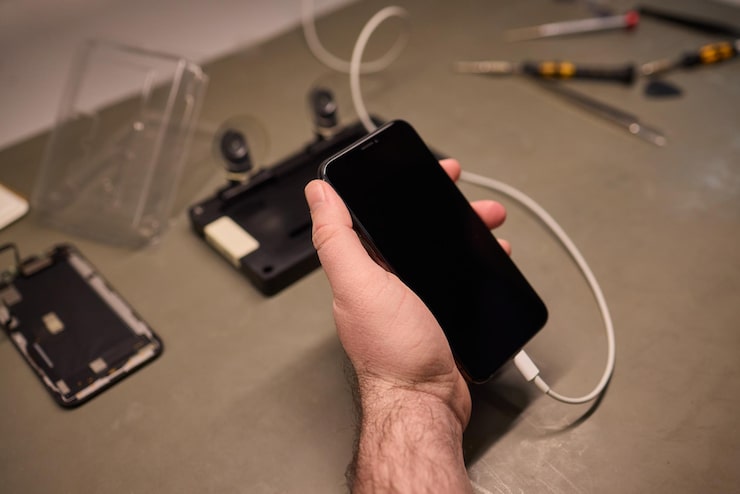
A proper phone charging port repair usually starts with cleaning out debris first, since that alone fixes a surprising number of cases without needing anything more invasive. If the port itself is physically damaged, bent pins or a cracked housing, the repair involves replacing the port component directly rather than just cleaning it out.
Turnaround is often faster than people expect walking in with a dead phone in hand. Mine took about twenty minutes, and the tech showed me exactly what had built up inside over the past few months, which honestly explained a lot about why my cable kept slipping loose randomly throughout the day for no obvious reason.
Should You Try Fixing It Yourself First
Cleaning with a toothpick or compressed air is reasonable enough for minor lint buildup, and plenty of people handle that part fine on their own at home without any real risk involved. Bent pins or anything involving actual disassembly, that’s a different situation entirely, and pushing too hard trying to fix it yourself can genuinely turn a minor issue into something requiring a full port replacement instead of a simple cleaning.
If gentle cleaning doesn’t resolve it within a few tries, it’s probably time to get it looked at properly by someone who does this regularly.
Conclusion
A flaky charging port is one of those problems that’s easy to live with right up until the exact moment you really can’t anymore. Catching it early, whether that’s a quick cleaning or an actual repair, beats discovering the hard way that your phone’s completely dead the morning of an early flight.